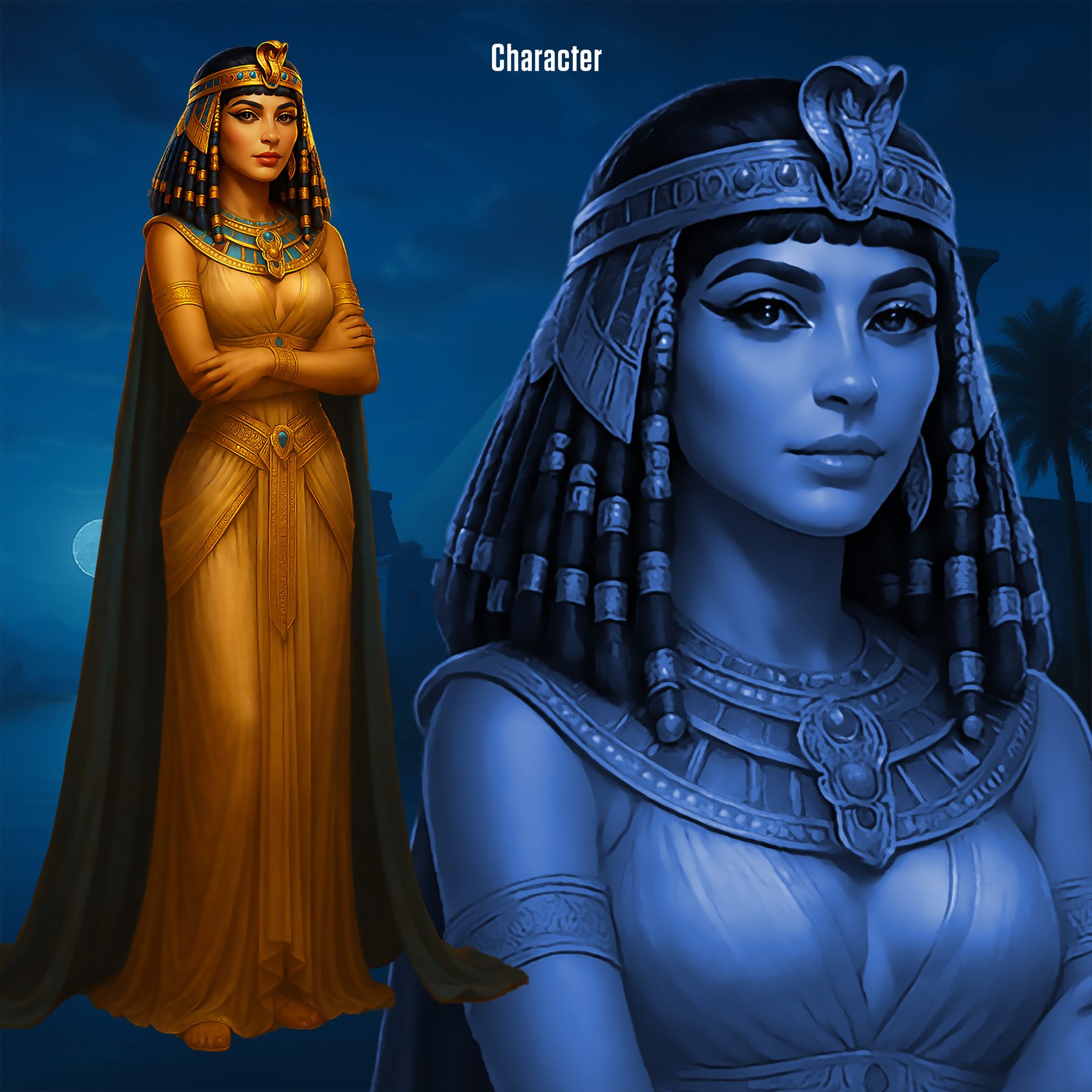
A slot’s launch art is the beginning of its visual life, not the end of it. Games that hold a strong position in a crowded lobby tend to share one operational habit: a steady cadence of seasonal reskins, event variants and tournament visuals that keep the title feeling current without touching the math underneath it. That cadence is LiveOps art, and it’s a different production problem than launch art — smaller in scope per drop, but relentless in frequency.
Why LiveOps art exists as its own category
Launching a game is a single, large production effort with a long runway. LiveOps content is the opposite: small, fast, frequent, and tightly time-boxed to a calendar you don’t control — Halloween doesn’t move if your studio is running behind. That constraint shapes everything about how this work has to be produced.
The core asset — the math, the base symbol set, the core mechanics — stays fixed. What changes is a themed visual layer on top: seasonal symbol variants, a festive background, event-specific UI accents, a limited-time logo treatment. It’s a narrower scope than a full reskin, which is exactly what makes fast turnaround possible.
What a typical LiveOps calendar looks like
Most operators run some version of:
- Seasonal drops — Halloween, winter holidays, Lunar New Year, summer — tied to broad calendar moments with wide player relevance
- Tournament and leaderboard visuals — competition-specific UI, banners and promotional art tied to a time-boxed event
- Anniversary or milestone variants — a game’s launch anniversary, a studio milestone, a jackpot threshold reached
- Collaboration or crossover content — thematic tie-ins that need a distinct visual identity without disrupting the base game’s brand
Each of these is a small, well-defined visual scope layered onto proven math — structurally similar to a reskin, but compressed in both size and timeline.
The production discipline that makes this work
Plan the calendar further ahead than feels necessary. Seasonal content has fixed, non-negotiable deadlines. A brief that arrives three weeks before Halloween is a much easier production than one that arrives one week before, even though the actual creative scope is identical. LiveOps art rewards studios and clients who plan quarters ahead, not weeks.
Build the base set with reskinning in mind from day one. Games designed with clean, separated layers and a well-organized source file are dramatically cheaper and faster to reskin for each seasonal pass than games whose launch art was delivered as flattened exports. This is one of the strongest arguments for insisting on layered source files even on a first production — the savings show up eighteen months later, every single season.
Keep the scope genuinely small. The temptation on every seasonal drop is to add “just one more thing” — a new symbol, an extra background variant. Each addition breaks the fast-turnaround economics that make LiveOps content viable at all. A disciplined seasonal scope is symbols + background + a logo/UI accent, full stop, most of the time.
Pro tip: batch your seasonal briefs at the start of the year if you can. A studio that knows it’s producing four seasonal passes for you across twelve months can plan capacity, offer better turnaround guarantees, and often better pricing than four separate one-off asks that show up unannounced.
Who this is for
LiveOps art matters most for operators and suppliers with an active, already-performing game they want to keep fresh, and for studios building a catalog where recurring visual refresh is part of the retention strategy rather than an afterthought. If your best-performing title hasn’t had a visual refresh in over a year, that’s usually the first place to look before commissioning something entirely new.
Huge Mega Play supports recurring seasonal and event production for existing titles — ask about reserved monthly capacity for ongoing LiveOps needs. Start a project →