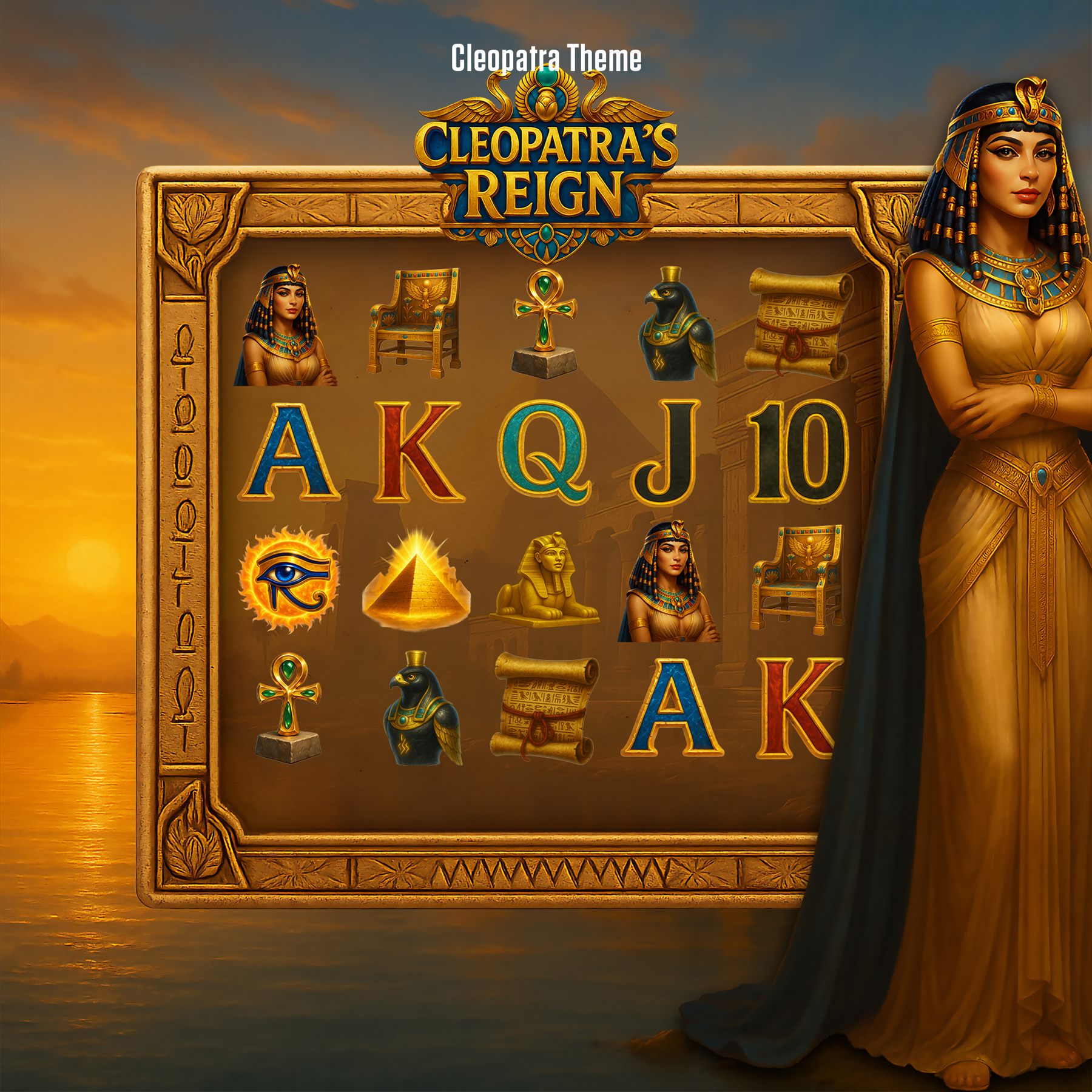
Most disappointing art deliveries aren’t a talent problem. They’re a brief problem — a studio produced exactly what was asked for, and what was asked for wasn’t precise enough to get the result the client actually had in mind. A good brief does the heavy lifting before a single symbol is drawn. Here’s what it needs.
Start with references, not adjectives
“Premium and modern” means something different to every illustrator on earth. Three to five reference images — competitor games, films, illustration styles, even a single symbol you love from another title — do more work than a paragraph of descriptive language. Be specific about what you like in each reference: is it the color palette, the linework, the lighting, the level of detail? A studio can match a style far more reliably than it can match a mood.
Pro tip: include at least one negative reference — something close to what you want but not quite, with a note on what’s wrong about it. That single example often prevents more misdirection than five positive references combined.
Define the theme in one sentence, then expand
“Ancient Egypt” is a theme. “Ancient Egypt, but the tomb-raider pulp-adventure version, not the museum-documentary version” is a brief. The one-sentence version forces you to decide the actual angle before the studio has to guess at it.
From there, list:
- The core narrative or fantasy the game is selling
- 3–5 specific visual motifs that should appear (a particular artifact, creature, color signature)
- Anything explicitly off-limits (a competitor’s IP you need to stay clearly distinct from, imagery that won’t clear certain jurisdictions)
Lock the technical specs before creative starts
Creative decisions and technical decisions are different conversations, and mixing them mid-production is where timelines slip. Before art begins, confirm:
- Reel layout and symbol count (how many low-pay, mid-pay, high-pay, wild/scatter positions)
- Aspect ratios needed (landscape key art, portrait/mobile, square app icon)
- Engine and file format requirements (what your integration pipeline actually needs to receive)
- Whether animation is in scope now or planned as a later phase
Pro tip: if animation is even a possibility for phase two, say so up front. Static art built with animation in mind — separated layers, clean silhouettes, room for rigging — costs nothing extra now and saves real rework later.
Say what “done” looks like
Ambiguity about the finish line is the most common source of scope creep. Specify:
- Whether you need layered source files, flattened exports, or both
- How many revision rounds are included, and whether feedback should be batched or can trickle in
- Who signs off, and whether that’s one person or a committee (committees should still speak with one voice back to the studio)
A brief template you can reuse
GAME: [working title]
THEME (one sentence):
REFERENCES: [3-5 links/images, with a note on what to take from each]
NEGATIVE REFERENCE (optional): [what to avoid, and why]
CORE MOTIFS: [3-5 specific visual elements]
SYMBOL COUNT: [low / mid / high / wild / scatter]
ASPECT RATIOS NEEDED:
ANIMATION IN SCOPE: [yes now / maybe later / no]
DELIVERY FORMAT: [layered / flattened / both]
TARGET DATE:
SIGN-OFF OWNER:
Ten minutes filling this out saves days of back-and-forth later. It’s also, not coincidentally, close to what a well-run studio’s own intake form will ask for — because the studios that get this right have learned the same lesson from the other side of the table.
What a good studio does with a bad brief
Even with a template, briefs will sometimes be vague — that’s normal on a first project with a new partner. What separates a studio worth working with is what happens next: does it ask sharp clarifying questions before starting production, or does it start drawing and hope? The former costs you ten more minutes. The latter costs you a revision round, or a style test that didn’t need to happen twice.
Huge Mega Play’s intake brief takes about ten minutes — no discovery call required unless you want one. Start a project →